

A global automotive parts manufacturer with plants across North America and Europe used StackAI to help automate one of its most cost-sensitive problems—scrap on the production line—while keeping the expertise of quality and process engineers in focus. IT leadership quickly saw the potential for AI to absorb the slow work of combing through production and QC files that consumed entire shifts, and they now have three dedicated AI workflows in production that are rolling out plant by plant.
The Challenge
Like most manufacturers, quality data lived in production spreadsheets exported from the line at the end of each shift. Everything the plant needed was in those files: defect counts by material, cure cycle, mold, and press. But identifying patterns meant manually reading thousands of rows, preventing teams from getting insights in a timely manner.
The same lag showed up off the floor. Curing adjustments depended on the availability of a senior engineer. Procurement only saw supplier and price risk once a higher quote came back. The company's CIO wondered whether AI agents could work off the data they already collected, without replacing the MES or asking operators to change how they logged results. That’s when they found StackAI.
The Solution
Working with a dedicated StackAI customer success team, the team devised three use cases. These agentic workflows read files the plant had already produced, so adoption didn’t require fundamentally changing how operators recorded data. Keeping a human review queue for low-confidence curing changes gave engineers a reason to trust the output rather than route around it. And because each agent solved one clearly scoped problem, the team could put them into production rapidly rather than waiting months for a prototype.
Defect Pattern Analyst
Just one of the company’s plants generates a production file every shift, thousands of rows covering defect counts by material, mold, press, and cure cycle. These files contain all of the information needed to detect a problem, but finding them requires hours of manual scanning. Due to the delay in pattern-finding, defects could persist for days on end.
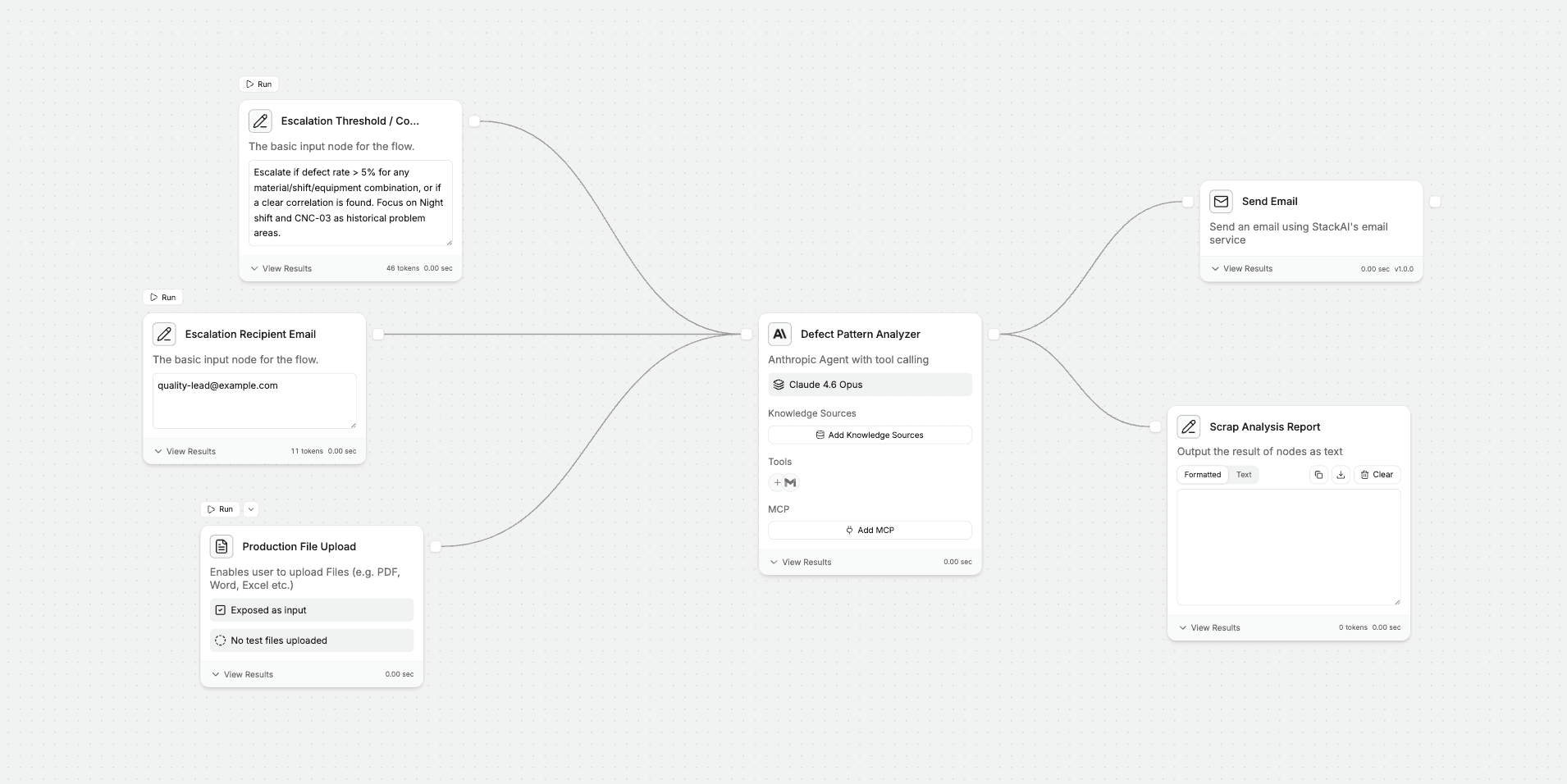
With StackAI, the team built a workflow that first takes the shift file in any format, then compares it against escalation rules (for example, "flag any material, shift, or equipment combination with a defect rate above 5%"). The workflow then traces each defect pattern back to the specific material, shift, or machine behind it, and emails the quality lead a report with the batches, the materials, and the size of the deviation. With this workflow, an afternoon of filtering pivot tables became a streamlined two-minute review step for the team lead.
Press Control Agent
In tire manufacturing, raw rubber varies from batch to batch. Compounds may not always cure correctly, resulting in scrap. Catching this in advance has traditionally required a senior process engineer to read the batch's lab data and decide how to adjust the press. That expertise is scarce, and the company was unable to scale it across every shift and plant.
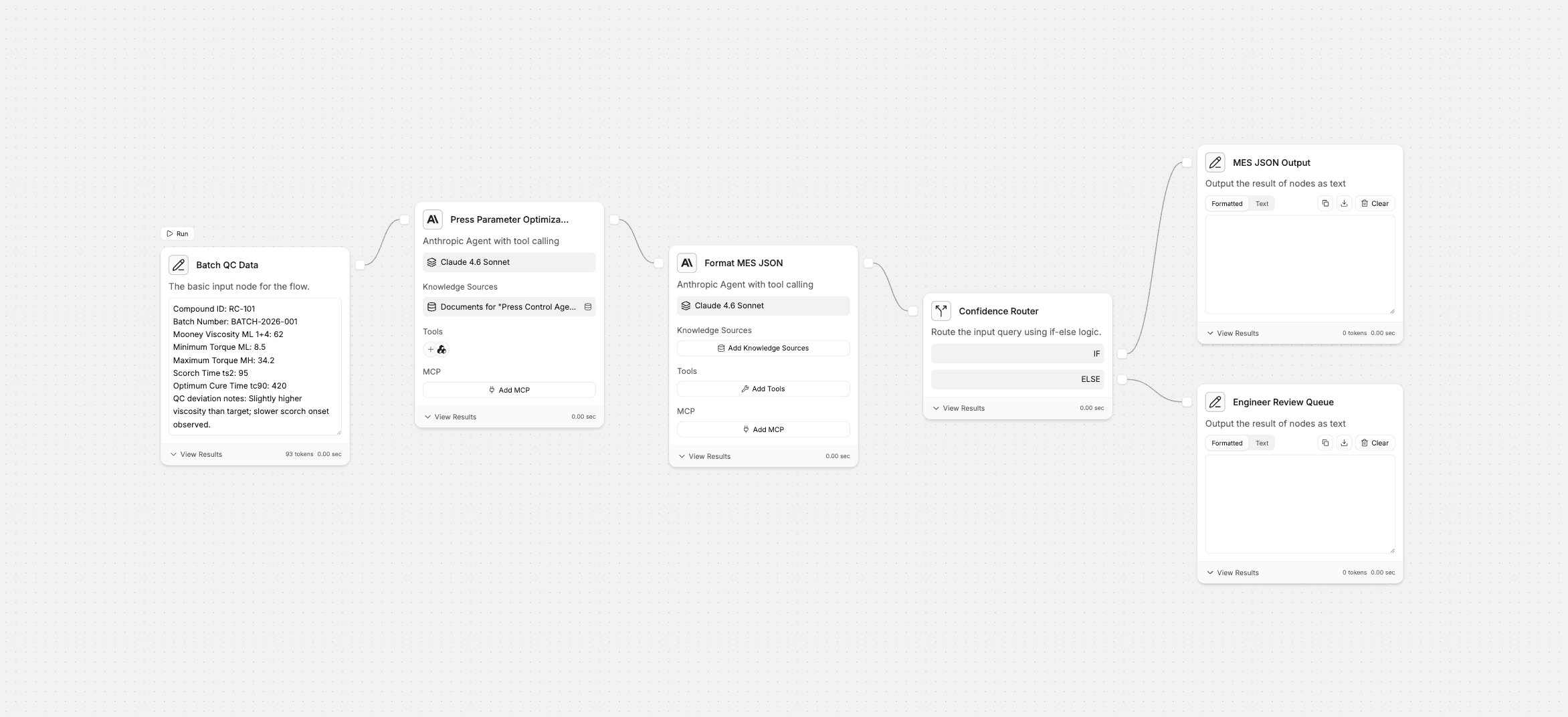
So they built a workflow that makes the first call with StackAI. It first reads a batch's QC data, viscosity, torque, scorch and cure times, and any deviation notes, checks it against a knowledge base of compound specs and past cure settings, and recommends a temperature, pressure, and cure time with a confidence score and a short rationale. Confident recommendations pass straight through in a format the curing press or MES (Manufacturing Execution System) can use directly. Anything below the confidence bar routes to an engineer review queue, so a process engineer approves or overrides before the setting reaches the press. This dramatically streamlines routine calls while ensuring that experts remain looped into the more nuanced situations.
Rubber Procurement Agent
Natural rubber prices swing with weather and oil markets, and the company’s buying desk was checking inventory, supplier status, and market prices by hand each morning. Because that review only happened once a day, the desk was left passively reacting to a price move instead of getting ahead of it.
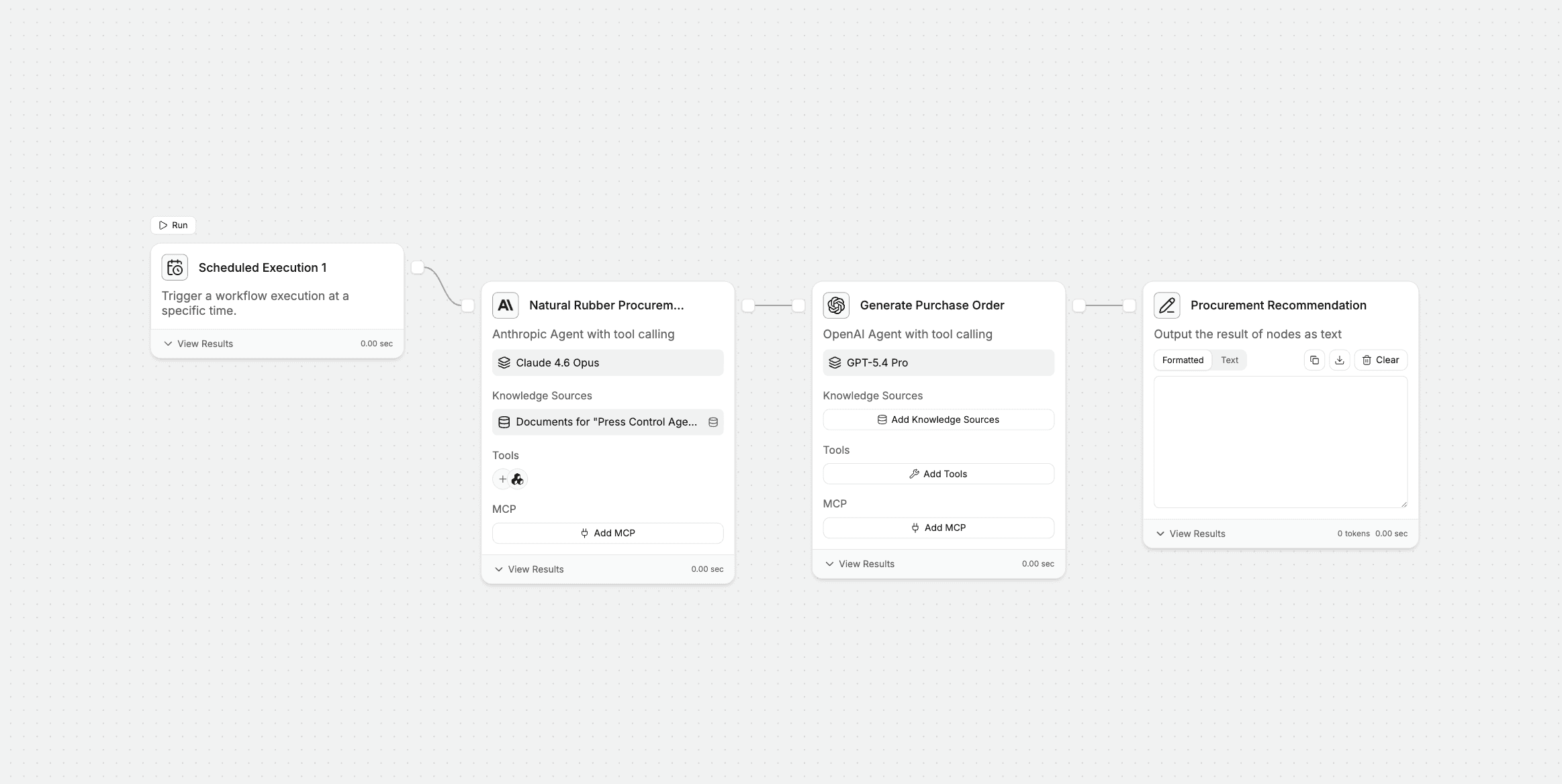
To accelerate the process, the team built a workflow that runs on its own every morning as an always-on procurement analyst. It checks current inventory against how fast the plant is consuming rubber, tracks supplier health, and compares the market against the plant's target price bands, using web search to stay current. Then it returns one clear proposal: draft a purchase order, buy opportunistically, defer and hedge, switch suppliers, or do nothing. When the call is to buy, it generates a formatted purchase order the desk can act on immediately, turning a daily manual scan into a recommendation ready to review and send.
What's Next
The same approach is moving beyond the production floor. The team is scoping two more agents, one for reconciling supplier statements against received inventory and one for triaging warranty claims, both aimed at the paperwork that currently pulls staff away from higher-value work.
Want to learn how StackAI can help transform your manufacturing processes with AI agents? Request an AI strategy assessment with our team here.
Customers
Explore More Customer Stories
How a Top REIT Turned Documents into Instant Insights with AI Agents
Real estate investment teams were slowed down by manual, document-heavy workflows that delay underwriting and investment committee decisions.
How Diné Development Corporation Built an AI-First Operating Model with StackAI
The YMCA Retirement Fund wanted to scale participant support and internal knowledge access without increasing staff or operational complexity.
The Future of Participant Service: How the YMCA Retirement Fund Delivers 24/7 Member Support with AI Agents
The YMCA Retirement Fund wanted to scale participant support and internal knowledge access without increasing staff or operational complexity.





