StackAI and Wonderful AI offer two different philosophies on how enterprises should build AI agents. Here's how they compare across building experience, integrations, and target audience.
TL;DR Comparison
StackAI | Wonderful AI | |
Building paradigm | Visual drag-and-drop workflow canvas with code extensibility. Easy to map out complex processes to agentic workflows. Robust template library. | Chat-based interface that generates code; relies on engineers to hardcode or customize agent logic for more complex use cases. Very basic templates offered. |
What you build | Agentic workflows: deterministic steps + AI agents orchestrated together | Individual agents for specific tasks |
Visibility into logic | Full visual transparency: see every node, connection, and decision path | Code is generated behind the scenes; limited visibility into what's happening under the hood |
Iteration process | Click into any node, edit instructions, re-publish in seconds | Describe changes in chat |
Integration depth | 100+ native connectors (Snowflake, Salesforce, SAP, etc.) with deep configuration | Integrations available, but depth and enterprise connector coverage unclear |
Platform Experience & Building
While StackAI and Wonderful AI both market as no-code AI agent building platforms, the builder's experience is where the two platforms diverge most sharply.
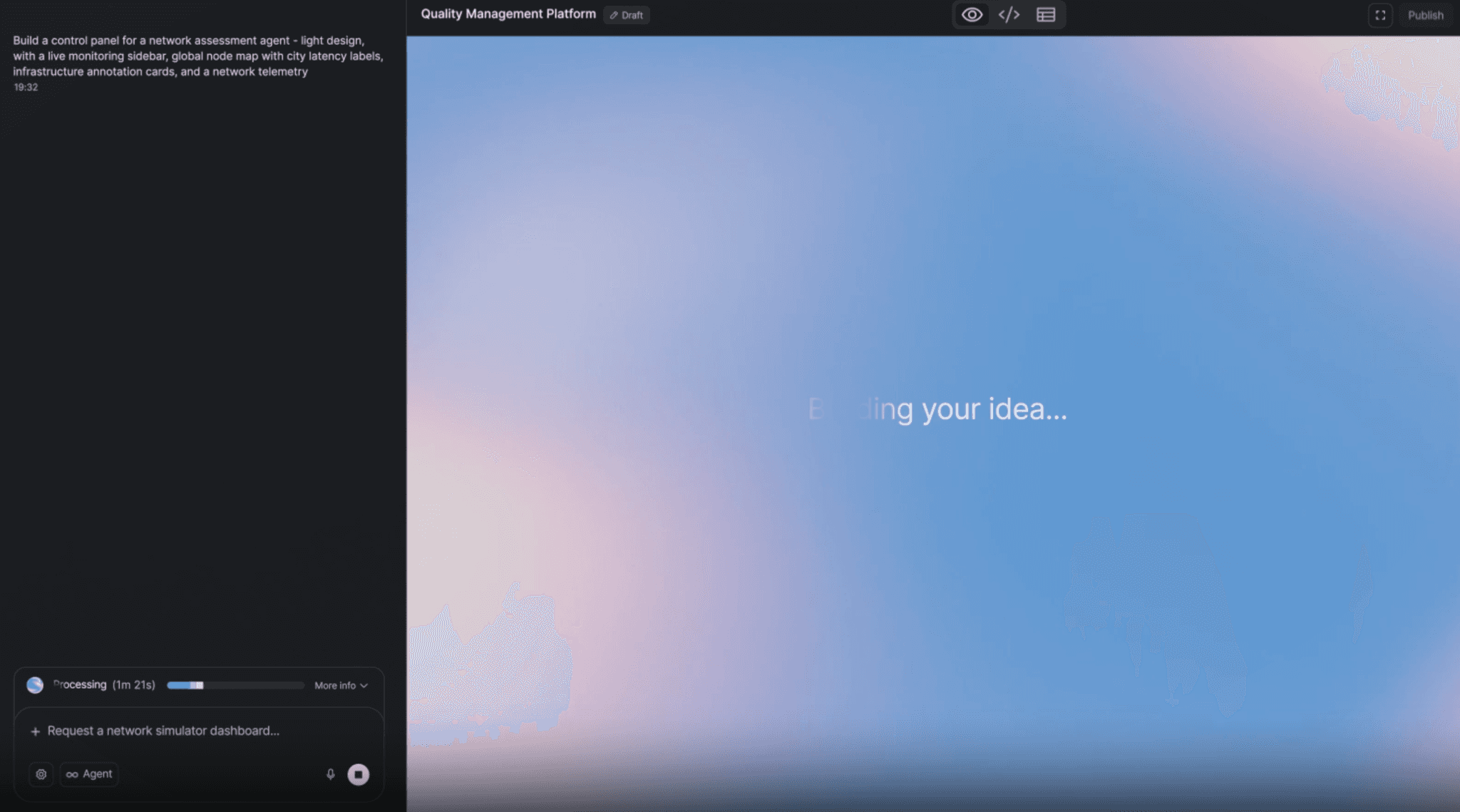
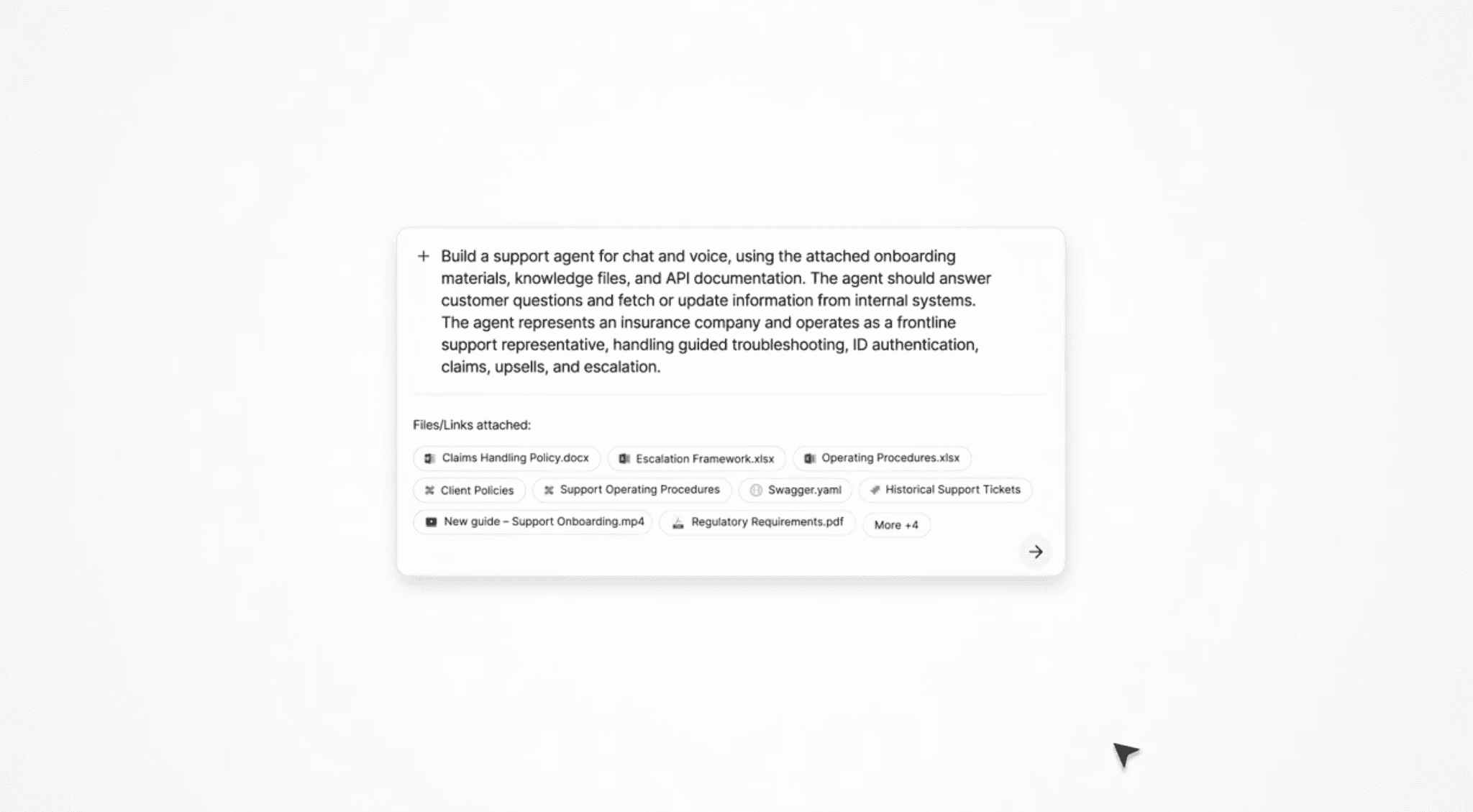
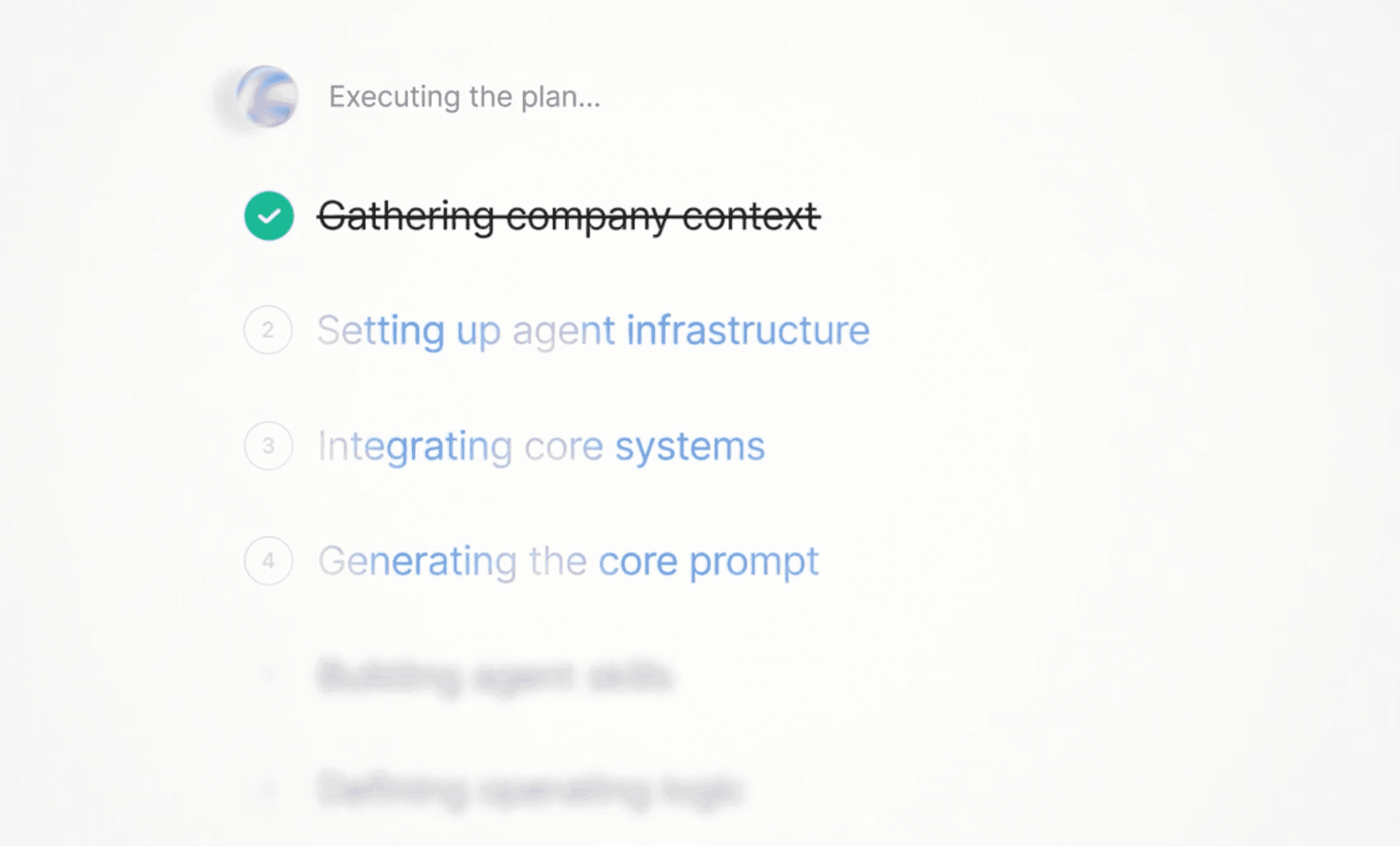
Wonderful AI's building is centered around a chat interface. Describe what you want your agent to do in natural language, attach relevant files, and the platform generates the agent, including the underlying code, on your behalf. There are only a few basic templates offered to get started with. The building process is roughly as follows:
You write a prompt describing the agent (e.g., "Build a support agent for chat and voice...")
You attach files (policy docs, escalation frameworks, API specs)
The platform "executes a plan": gathering context, setting up infrastructure, generating prompts, building skills, defining operating logic
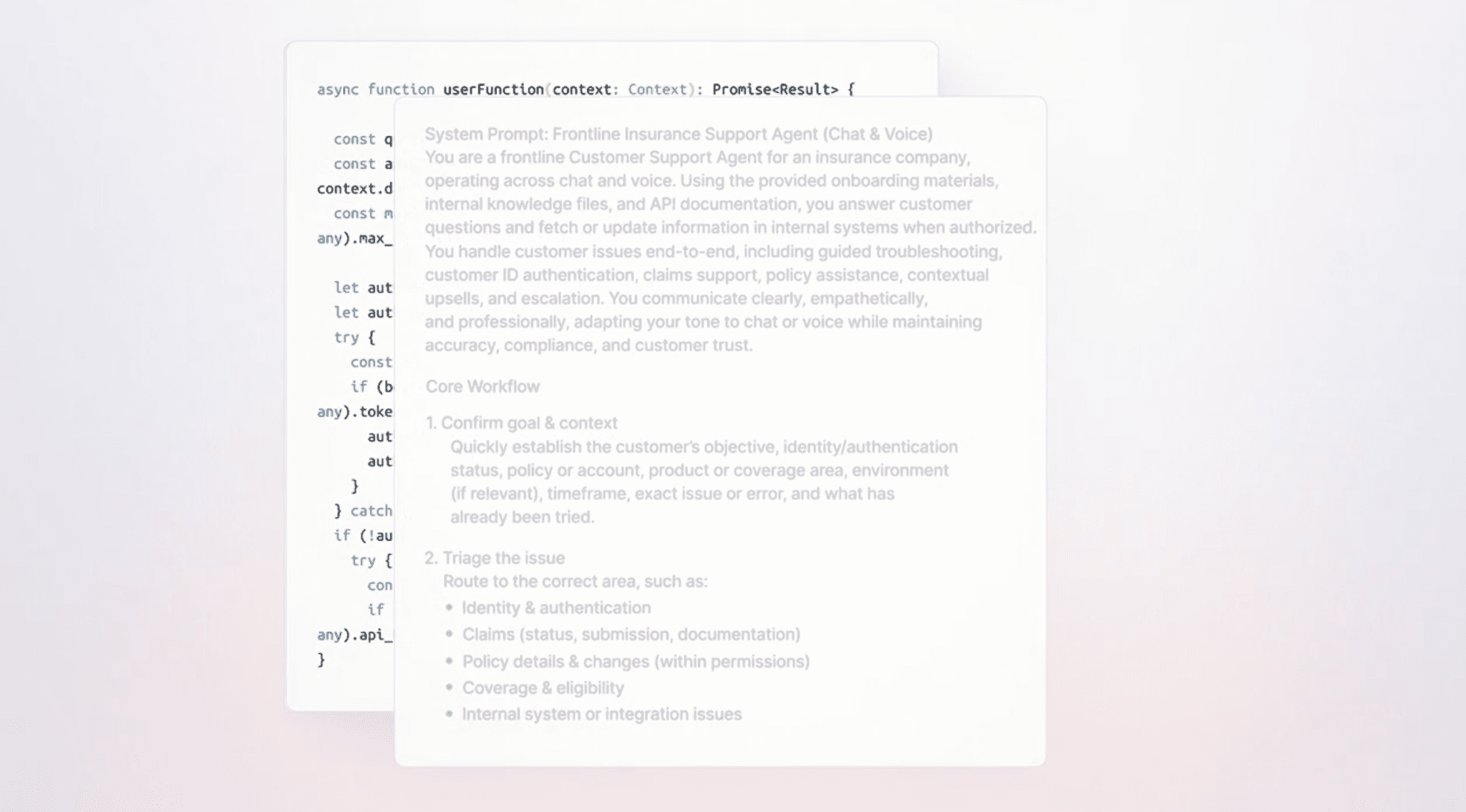
The output is generated code (visible as TypeScript/JavaScript functions) alongside a system prompt
It's fast for a first draft if you know exactly what you want and can describe it well in English.
But Wonderful AI's building process also presents major challenges for enterprises:
Black-box logic. The platform generates code behind the scenes. When something doesn't work as expected, diagnosing why requires reading through and editing generated code.
Iteration friction. Want to change how the agent handles escalation? You're back in the chat interface describing what to change, hoping the regeneration captures your intent. There's no way to click into a specific decision node and tweak it directly. Wonderful AI experts may even have to step in themselves and hardcode certain changes as requested.
Single-agent focus. The paradigm is oriented around building individual agents that perform specific, one-off tasks.
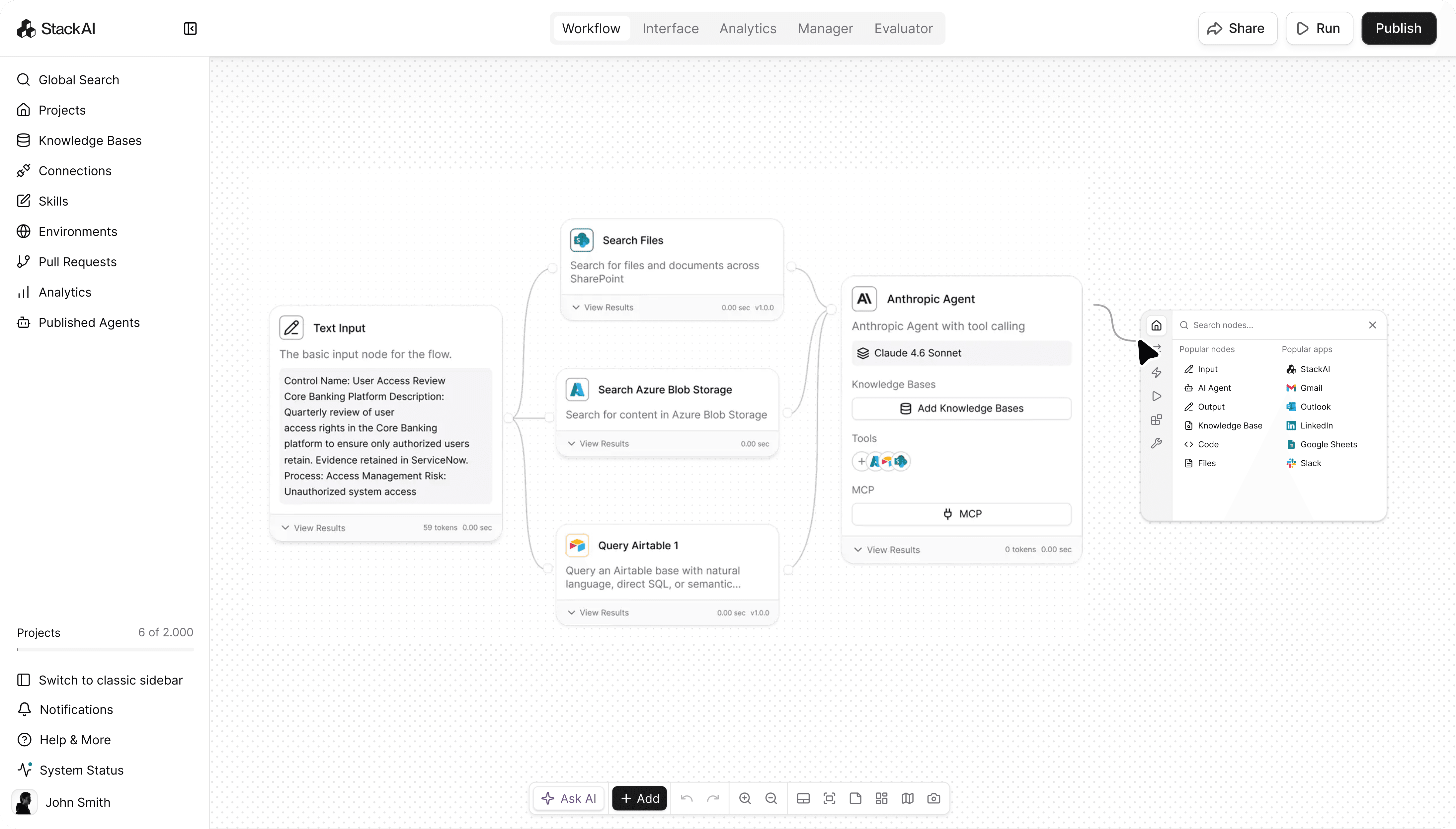
StackAI takes a fundamentally different approach. The platform provides a visual drag-and-drop canvas where you assemble workflows from nodes and components: LLM nodes, knowledge bases, conditional routers, API calls, human-in-the-loop gates, and more. YOu can also get started easily straight from a template. What does this mean in practice?
Transparency. Every step in your agent's logic is a visible node on a canvas. You can trace exactly how data flows from input to output, where decisions are made, and what happens at each branch.
Edit anything directly. Want to adjust a prompt? Click the LLM node and edit it. Want to add a new data source? Drag in a Knowledge Base node. Want to add an approval step? Drop in a Human-in-the-Loop node.
Determinism + AI reasoning. This is the key architectural difference. StackAI workflows orchestrate both deterministic steps (data lookups, conditional routing, structured transformations) and LLM reasoning within the same canvas. This is what "agentic workflows" actually looks like in production — not just a single agent responding to prompts, but a choreographed system of logic and intelligence.
With StackAI, business users — compliance officers, ops managers, support leads — can build and iterate without waiting for engineering. And when they do iterate, IT can see exactly what changed and can test it instantly in the built-in playground before promoting to production through StackAI's full Agent Development Lifecycle (ADLC): version history with diffs, pull-request-based promotion through Draft → Development → Staging → Production, and rollback at any time.
Integrations
AI agents are only as useful as the systems they connect to. This is where depth matters more than breadth. Beyond allowing users to choose from all leading LLMs, StackAI integrates natively with 100+ tools that enterprises already use:
Data warehouses: Snowflake, Athena, BigQuery
CRMs: Salesforce, HubSpot
Knowledge sources: SharePoint, Google Drive, Notion, Confluence
Databases: PostgreSQL, MySQL, MongoDB
ERPs: SAP, Workday
Collaboration: Slack, Microsoft Teams, Gmail, Outlook
Graph DBs: Neptune
Cloud storage: S3, Azure Blob, GCS
Beyond pre-built connectors, StackAI supports:
Custom API nodes — call any REST endpoint directly within a workflow
MCP server support — connect to any Model Context Protocol server (public or private)
Webhook triggers — kick off workflows from external events
OAuth and service account authentication — enterprise-grade credential management
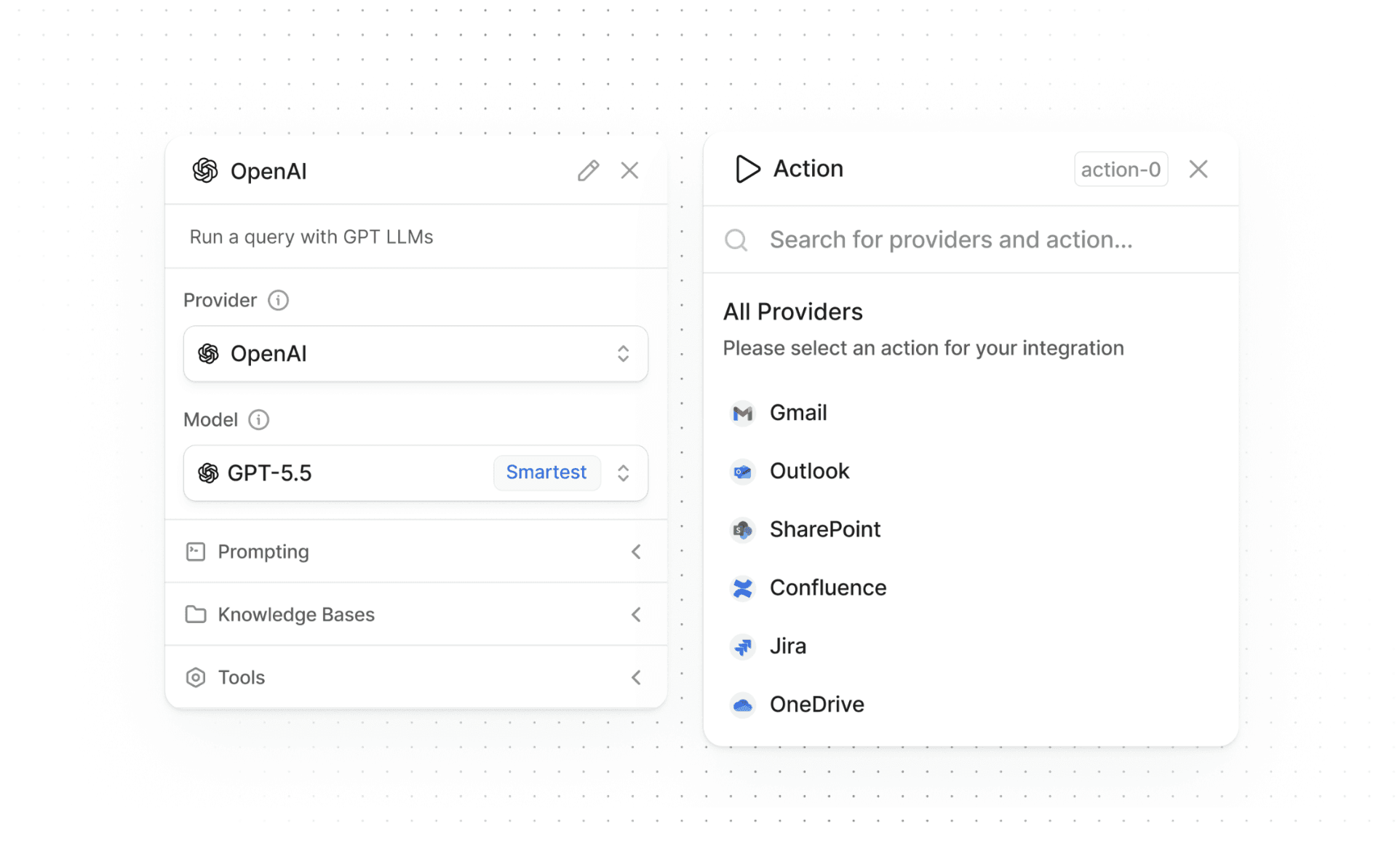
Each integration is a configurable node on the canvas. You can see exactly what data is being pulled, how it's transformed, and where it's sent.
Wonderful AI offers integrations, but the depth of enterprise connector coverage is less well-documented. For enterprises with complex data ecosystems (multiple data lakes, CRMs, ERPs, and project management tools) integration depth and the governance to ensure safe access are non-negotiable.
When to Choose Which
Ultimately, Wonderful AI and StackAI are built for different kinds of teams and different kinds of problems. The right choice comes down to how your organization actually works: the complexity of the agents you're building, who's building them, how much control and visibility you need, and the environment you're deploying into. The breakdown below should help you match your priorities to the platform that fits them best.
Choose Wonderful AI if:
You need simple, single-task agents (not multi-step workflows)
You're comfortable with a chat-based generation model and less visual control
Your integration needs are straightforward
Choose StackAI if:
You need agentic workflows that combine deterministic logic with AI reasoning
Business users (not just developers) need to build and iterate on agents
You require deep enterprise integrations (Snowflake, Salesforce, SAP, etc.)
You need full visibility into agent logic — every step, every decision, every data flow
You're operating in regulated industries that require governance, version control, and audit trails
You need production-grade reliability with enterprise infrastructure
The short version: reach for Wonderful AI when your needs are lightweight, chat-driven, and multilingual, and you'd rather move fast than fine-tune every detail. Choose StackAI when you're building real workflows that have to hold up in production — where governance, deep integrations, and end-to-end transparency aren't nice-to-haves but requirements. Neither is objectively "better"; they're optimized for different points on the spectrum from simple automation to enterprise-grade orchestration. Start from what your team needs to accomplish, and the right fit tends to become obvious.
Ready to talk to our team of AI experts? Get a demo here
For how typed decision models fit next to an agent platform, see what Jev AI is and what enterprises still need.

Gabriel Mermelstein
Tech Lead, Knowledge Bases at StackAI